Unlocking Creative Potential: A Guide to Using Miniature Girl with Flower and Heart Vector Clipart
In the vibrant world of digital design, few elements capture the essence of whimsy and affection quite like a miniature girl with flower and heart. This specific motif has become a staple for creators ranging from hobbyist crafters to professional graphic designers. However, understanding the technical backbone of these assets—specifically when they are provided as vector-based clipart—is crucial for maximizing their potential. Whether you are designing a logo, creating wall art, or assembling handmade invitations, grasping the nuances of file formats, resolution, and color palettes will transform how you approach your projects.
This article serves as an educational guide to help you understand the significance of high-quality digital graphics. We will explore why files created in programs like Adobe Illustrator matter, how to utilize different file formats like SVG, JPG, and PNG, and where these charming illustrations fit into modern creativity and business.
The Power of Vector Graphics: Why Source Matters
When you download a digital asset, you might notice terms like "vector," "raster," "300 DPI," or "RGB." For beginners, these can seem like technical jargon, but they are the foundation of professional-quality design. The miniature girl with flower and heart illustration described here is not just a simple picture; it is a mathematical construction created in a vector program.
Unlike standard photographs made of pixels (which can become blurry when enlarged), vector graphics are built using paths defined by mathematical equations. This means the image remains crisp and sharp regardless of its size. Whether you print this design on a tiny jewelry pendant or blow it up for a large piece of wall art, the lines will remain perfect. This scalability is the primary reason professionals insist on vector files for logo design and large-format printing.
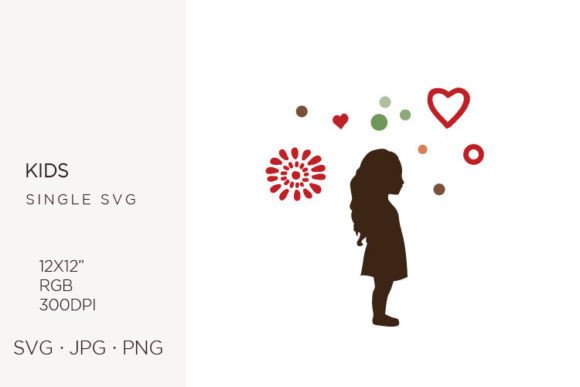
The specific asset we are discussing boasts an artboard size of 12 x 12 inches with a resolution of 300 DPI (dots per inch) in the RGB color palette. Let's break down what this means for your workflow:
- 12 x 12 Artboard: This provides a generous canvas. Even though the character is "miniature," the surrounding space allows you to add text, patterns, or other decorative elements without crowding the design.
- 300 DPI: This is the gold standard for printing. It ensures that when you transfer the digital image to physical paper, cardstock, or fabric, the output is sharp and free of pixelation.
- RGB Color Palette: RGB (Red, Green, Blue) is optimized for screens. While CMYK is often used for commercial offset printing, RGB is ideal for web design, digital invitations, and most home printers or print-on-demand services.
Understanding File Formats: SVG, JPG, and PNG
To truly leverage these digital graphics elements, one must understand the differences between the provided file formats. Each serves a distinct purpose in the ecosystem of graphic and web design.
- SVG (Scalable Vector Graphics): This is the most versatile format for designers. Because it retains the vector data from Adobe Illustrator, you can open an SVG in editing software to change colors, resize elements, or separate the girl from the flower and heart. It is essential for logo design where adaptability is key.
- PNG (Portable Network Graphics): PNG files are raster images that support transparency. If you want to place the miniature girl onto a colored background for a party decor banner or a website header without a white box surrounding her, PNG is your go-to format.
- JPG (Joint Photographic Experts Group): This is a universal format compatible with almost every device and software. While it does not support transparency, it is excellent for sharing previews, uploading to social media, or using in documents where file size needs to be manageable.
Practical Applications in Modern Creativity
The versatility of a well-crafted vector illustration extends far beyond simple decoration. In today's creator economy, individuals and small businesses rely on high-quality assets to build brands and create unique products. Here is how you can apply the miniature girl with flower and heart across various domains.
Branding and Logo Design
For boutiques, bakeries, or children's clothing lines, a logo needs to convey personality instantly. The imagery of a girl holding a flower and a heart suggests themes of growth, love, innocence, and nature. By using the SVG file, a designer can isolate the heart element to create a favicon for a website or use the full composition as a primary brand mark. The ability to edit the vector paths ensures the logo looks professional on both a business card and a storefront sign.
Handmade Crafts and Stationery
The rise of the "maker movement" has led to a surge in demand for unique handmade cards and stationery. Crafters can print the 300 DPI JPG or PNG onto high-quality cardstock to create greeting cards for birthdays, anniversaries, or Valentine's Day. Furthermore, these files are perfect for printed paper items like scrapbooking layouts, planners, and journals. The 12x12 dimension aligns perfectly with standard scrapbook paper sizes, minimizing waste and simplifying the layout process.
Event Planning and Party Decor
Planning a party often requires cohesive visual themes. This clipart can be scaled up to create large announcements or invitations. Imagine a baby shower or a first birthday party where the theme revolves around nature and love; this graphic becomes the central motif for cupcake toppers, banners, and thank-you tags. The clarity of the vector source ensures that even when printed on large vinyl decals for party decor, the edges remain smooth.
Jewelry and Wearable Art
One of the more advanced applications involves jewelry making. With the precise lines of a vector file, artisans can use the design to create molds for resin pendants, engrave metal charms, or print sublimation designs onto ceramic tiles for necklaces. The "miniature" aspect of the girl makes her particularly suited for small-scale wearable items where detail is paramount.
Common Misunderstandings and Best Practices
Despite the clear benefits of vector art, there are common assumptions that can hinder a project's success. A frequent misunderstanding is that all digital images are created equal. Many users attempt to stretch a low-resolution JPG to fit a large poster, resulting in a blurry, unprofessional mess. By starting with files made in Adobe Illustrator with a 300 DPI baseline, you avoid this pitfall entirely.
Another assumption is that RGB files cannot be printed. While professional offset printing often requires CMYK conversion, most modern home printers and online print-on-demand services handle RGB files exceptionally well, often producing more vibrant colors than their CMYK counterparts. However, if you are sending files to a professional press for a large run of invitations, it is always wise to check their specific color profile requirements.
Furthermore, beginners often overlook the value of layers in vector files. When you open the SVG in a compatible editor, you aren't just getting a flat image; you are getting a structured arrangement of elements. This allows you to recolor the flower to match a specific brand palette or remove the heart if the context requires a different emotional tone. This flexibility is the true power of vector-based clipart.
Building a Broader Understanding of Digital Assets
In the grand scheme of technology and education, learning to manipulate these files is a valuable skill. It bridges the gap between artistic vision and technical execution. For educators, teaching students how to distinguish between file types fosters digital literacy. For entrepreneurs, understanding the licensing and utility of these graphics can save money on custom illustrations while maintaining a high standard of quality.
The miniature girl with flower and heart is more than just a cute drawing; it is a versatile tool. Whether used to craft a heartfelt handmade card for a loved one or to launch a new line of graphic and web design products, the quality of the source file dictates the quality of the final result. By choosing assets with proper resolution, scalable vector formats, and thoughtful composition, you empower yourself to create work that resonates with audiences and stands the test of time.
As you embark on your next creative endeavor, remember that the right tools make all the difference. Embrace the flexibility of SVGs, the convenience of PNGs, and the universality of JPGs. With a solid foundation in these digital elements, your imagination is the only limit to what you can create.