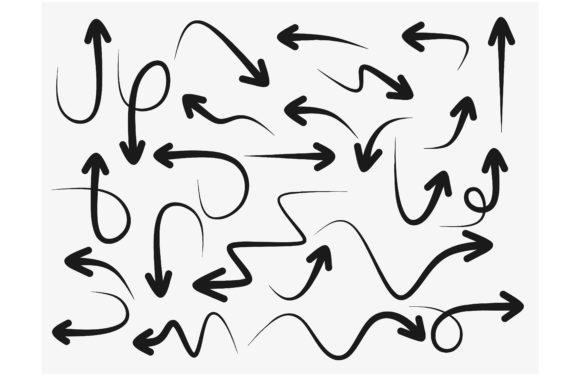
Integrating a Hand Drawn Set of Arrow Elements into Professional Creative Workflows
In the landscape of modern digital design, where sleek vectors and pixel-perfect geometry often dominate, there is a growing demand for assets that convey authenticity and human touch. A hand drawn set of arrow elements serves as a critical bridge between rigid corporate aesthetics and approachable, engaging communication. These illustrations are not merely decorative; they are functional tools designed to guide user attention, indicate progression, and clarify complex information across various mediums including websites, mobile applications, posters, and marketing banners. Understanding how to effectively integrate these assets into a broader creative process requires a shift from viewing them as simple clip art to treating them as strategic components of visual storytelling.
Strategic Placement in the Design Lifecycle
The utility of hand-drawn arrows extends far beyond the final polish of a project. Savvy creators and entrepreneurs incorporate these elements during the planning and prototyping phases to establish tone and direction early on. When initiating a new web layout or app interface, using sketched directional cues can help stakeholders visualize user flow without getting bogged down in the specifics of final UI components. This approach allows teams to focus on the logic of movement rather than the precision of lines.
During the execution phase, these elements become vital for highlighting key calls to action (CTAs). Unlike standard geometric arrows that can feel cold or instructional, a hand-drawn variant suggests a personal recommendation, subtly encouraging the user to click, swipe, or read further. For marketers and bloggers, this distinction is crucial. It transforms a static banner into a dynamic invitation. When used in educational materials or presentations, these arrows mimic the experience of a teacher pointing to a whiteboard, making abstract concepts feel more tangible and easier to digest.
Post-project, these assets maintain value in maintenance and iteration. Because hand-drawn styles are inherently less rigid, they age better than trendy, ultra-modern graphics. A set of arrow elements created today can seamlessly fit into a refreshed design two years from now without looking dated, provided the core brand identity values authenticity over fleeting tech aesthetics. This longevity makes them a cost-effective resource for small business owners and freelancers who need to maximize the lifespan of their creative assets.
Compatibility and Technical Integration
One of the primary concerns when adopting new visual assets is compatibility with existing tools and platforms. A high-quality hand drawn set of arrow elements is typically delivered in versatile formats such as SVG, PNG, or AI, ensuring smooth integration into industry-standard software like Adobe Illustrator, Photoshop, Figma, or Canva. For web developers, SVG formats are particularly valuable as they allow the arrows to scale infinitely without losing resolution, ensuring crisp display on high-DPI screens and mobile devices.
When implementing these graphics into a website or app, it is essential to consider load times and file optimization. While the aesthetic is organic, the underlying code must be efficient. Developers should strip unnecessary metadata from SVG files and ensure that the stroke weights remain consistent across different screen sizes. For non-technical users utilizing drag-and-drop builders, PNG files with transparent backgrounds offer a hassle-free solution, though one must be mindful of resolution limits when scaling up for large format prints like posters or trade show banners.
Furthermore, consistency is key when mixing hand-drawn elements with other design components. If your brand relies heavily on strict grid systems and sans-serif typography, introducing a sketchy arrow requires careful balancing. The goal is to create contrast that draws the eye, not chaos that confuses it. A practical method is to use the hand-drawn arrows exclusively for secondary actions or annotations, reserving standard UI elements for primary navigation to maintain usability standards while adding personality.
Enhancing User Experience and Engagement
The psychological impact of visual cues cannot be overstated. In a world saturated with polished, algorithmic content, the imperfection of a hand-drawn line signals humanity. For educators and content creators, this can significantly boost engagement rates. When a learner sees a hand-sketched arrow connecting two ideas in a diagram, it triggers a cognitive association with note-taking and active learning, making the material feel less like a broadcast and more like a conversation.
For e-commerce sites and landing pages, these elements can guide the customer journey with subtlety. Instead of a bold, aggressive button, a sketched arrow pointing towards a "Learn More" section feels like a helpful nudge. This reduces friction in the decision-making process. Marketers can leverage this by using arrows to annotate screenshots in case studies or to highlight specific features in product demos. The informal nature of the graphic lowers the perceived barrier to entry, making the brand appear more accessible and trustworthy.
It is also important to consider accessibility. While hand-drawn arrows add flair, they must still serve their functional purpose clearly. Ensure that the directionality is unambiguous and that there is sufficient contrast between the arrow and the background. For users relying on screen readers, always include appropriate alt text describing the function of the arrow (e.g., "Arrow pointing to download button") rather than just its appearance. This ensures that the inclusive benefits of the design extend to all users.
Workflow Optimization and Asset Management
To truly benefit from a hand drawn set of arrow elements, organizations should treat them as part of a centralized design system. Freelancers and agencies managing multiple clients often struggle with asset disorganization. By categorizing these arrows based on function (e.g., "process flow," "call to action," "decorative swirls") and style (e.g., "bold marker," "fine pen," "chalk"), teams can retrieve and deploy them rapidly. This organization streamlines the production process, allowing designers to focus on high-level strategy rather than searching for the right graphic.
Collaboration is another area where standardized assets shine. When a team shares a common library of approved hand-drawn elements, it ensures brand consistency across different deliverables. Whether a social media manager is creating an Instagram story or a web designer is updating a homepage, the visual language remains cohesive. This prevents the "frankenstein" effect where different parts of a campaign look like they were made by different people with conflicting visions.
Moreover, these elements facilitate rapid prototyping. In agile environments, speed is often as valuable as perfection. Having a pre-made set of directional indicators allows product managers and designers to sketch out user journeys in real-time during meetings. This immediacy fosters better communication and faster decision-making, as ideas can be visualized instantly without waiting for custom illustration work.
Long-Term Value and Adaptability
The investment in a versatile set of hand-drawn graphics pays dividends through adaptability. As trends shift from flat design to neomorphism and back again, the organic nature of hand-drawn art tends to remain timeless. It sits outside the cycle of ultra-modern trends, anchoring a brand in a sense of craft and intention. For publishers and authors, this means illustrations created for a book can be repurposed for accompanying webinars, social media teasers, and merchandise without requiring a total redesign.
Quality control remains a priority even with "imperfect" art. When selecting or creating your set, ensure that the line weights are harmonious and that the style matches your brand's voice. A chaotic, scribbled arrow might work for a punk rock festival poster but would be inappropriate for a financial advisory firm's annual report. The key is finding the balance between casual and professional. Regularly audit your usage of these elements to ensure they are enhancing clarity rather than cluttering the interface.
Ultimately, the successful integration of a hand drawn set of arrow elements relies on intentionality. It is about choosing the right tool for the right job within a complex workflow. By understanding where these elements fit—whether in the initial brainstorming session, the detailed UI design, or the final marketing push—professionals can elevate their output. They transform standard communications into engaging narratives, guiding audiences with a gentle, human hand through the digital noise. As you plan your next project, consider how these simple yet powerful shapes can streamline your process and deepen your connection with your audience.